Why Some People Want Less from Their Smartphones
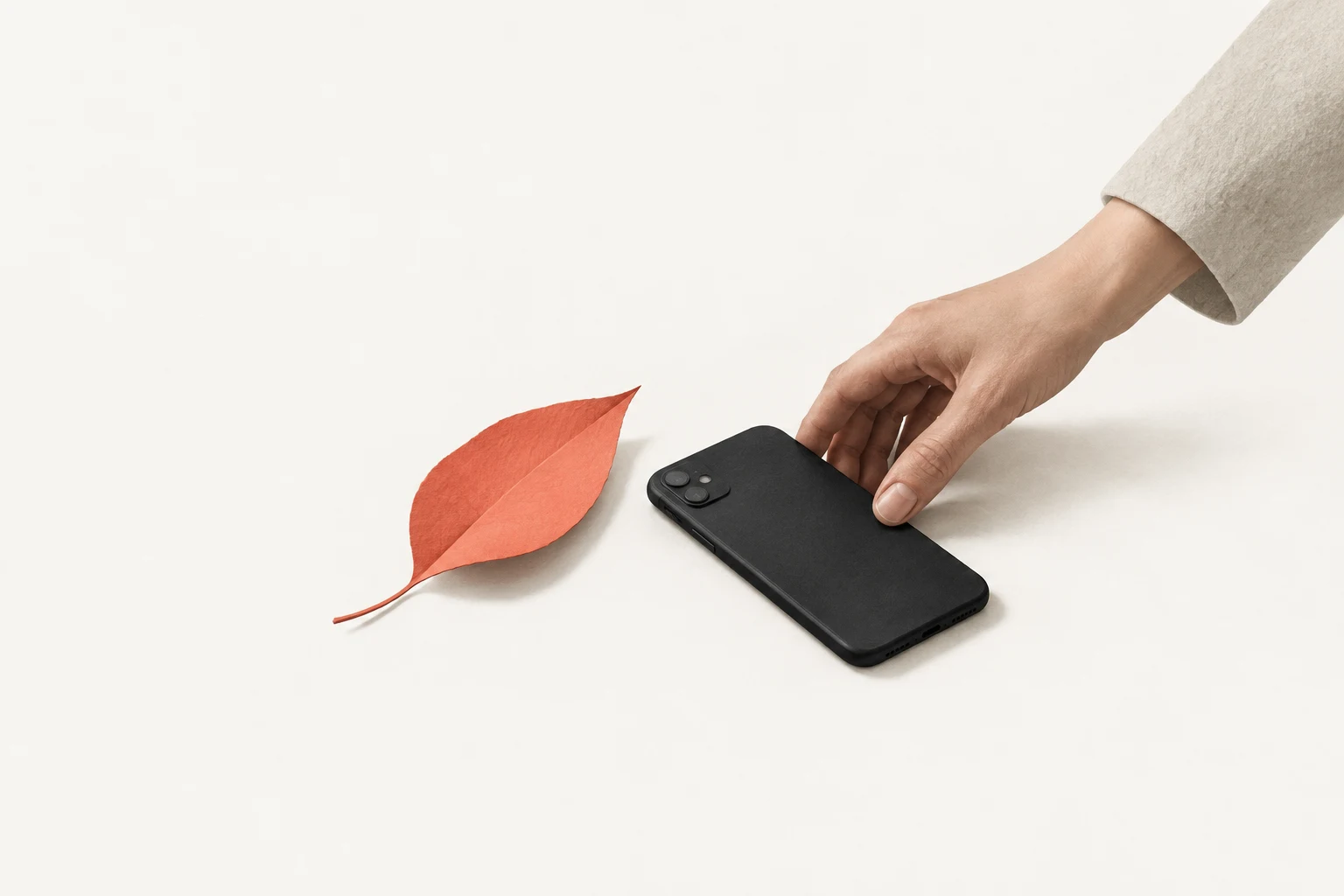
Imagine buying a new phone because of everything it cannot do.
Fewer apps. Fewer notifications. Fewer reasons to pick it up when you had intended to do something else.
For a category often sold through more features, that is an interesting proposition.
A simpler phone offers a different kind of benefit: less competition for your attention.
The question is how far that desire extends. Are people actually stepping away from smartphones? Or are they trying to make their existing phones easier to live with?
There are signs of people pulling back
A Pew Research Center report published in April 2025 found that 44% of U.S. teenagers said they had cut back on their smartphone use. The survey was conducted in September and October 2024; the comparable figure in its 2023 survey was 36%.
That is a meaningful signal of self-reported behaviour. It does not tell us that those teenagers replaced their smartphones, or establish a global trend across adults.
There is evidence of continued heavy use too. In Pew’s December 2025 report, 97% of U.S. teenagers said they used the internet daily, and 40% described themselves as almost constantly online.
Both findings can be true. Someone can want to use their phone less while continuing to rely on it throughout the day.
For me, that tension is more interesting than a dramatic prediction that smartphones are disappearing.
What a simpler phone is really offering
Light Phone describes its devices as designed to be used as little as possible. HMD has also promoted digital detox, including switching off for a few hours, using a feature phone or using a detox mode.
These are examples of companies positioning products around reduced distraction. They are not proof of a mass market shift.
But the proposition deserves attention.
For someone who wants fewer interruptions, removing capabilities can be a benefit. A limited device may make it easier to maintain a boundary than a setting that can be reversed in seconds.
There is also something appealing about an object with a clear purpose.
A camera takes a photograph. A music player plays music. A notebook holds a thought.
A smartphone can perform many of those functions extremely well. It can also place them beside messages, feeds, work and reminders. The distinction is in the experience of using it.
Leaving is easier to imagine than to do
The case for a simpler device encounters an obvious difficulty: the smartphone is useful.
Consider someone who needs maps, banking, a work authenticator and a messaging app. Replacing their phone may remove distractions and create several new inconveniences.
For that person, stepping back could mean deleting one app, changing notification settings or keeping the phone out of reach during a meal. It need not involve buying anything.
The practical question is which parts of connectivity they want to keep, and which parts they would prefer to encounter less often.
That also makes the behaviour difficult to describe as one movement. A person who buys a basic phone and someone who silences a group chat may share a desire for more control, while making very different choices.
What brands should notice
My interpretation is that the desire to step back raises a question about how brands treat attention.
A notification might be useful: a delivery update, a security alert or a reminder the customer requested.
It might also be another interruption with little relevance to the person receiving it.
Businesses can measure whether a message was opened. That alone does not tell them whether the customer welcomed it.
Imagine a retailer sending repeated reminders after someone has already completed a purchase. Each message creates another opportunity for contact. It may also leave the customer wondering why the business keeps asking for attention.
A quieter experience can still be a valuable one.
A website can answer a question without immediately asking for notification permission. A service can make preferences easy to change. A customer can receive information when it is relevant, with a clear way to stop receiving it.
These are choices about the relationship a brand wants to build.
A different idea of progress
I would be cautious about calling this the end of the smartphone era. The evidence here does not support that conclusion.
What it does show is a tension worth exploring: continued reliance on connectivity alongside a desire, among some people, to reduce its place in their lives.
Perhaps the interesting product question is becoming: how much technology helps me do what I came to do, and how much keeps asking me to do something else?
A phone that asks less of you can have a clear appeal.
And for brands, the same thought is worth considering.
Sometimes the most useful thing you can give a customer is an answer—and the freedom to put the phone down.
Sources
- Pew Research Center: Teens, Social Media and Mental Health, April 2025
- Pew Research Center: Teens, Social Media and AI Chatbots 2025, December 2025
- Light Phone: product positioning
- HMD: Take a Digital Detox and Shut the Phone Up, January 2025

Brand & Communications Strategist based in Amman. Curious about brands, people and the decisions that connect them.