Converse in I, Robot: A Classic Sneaker in a Future World
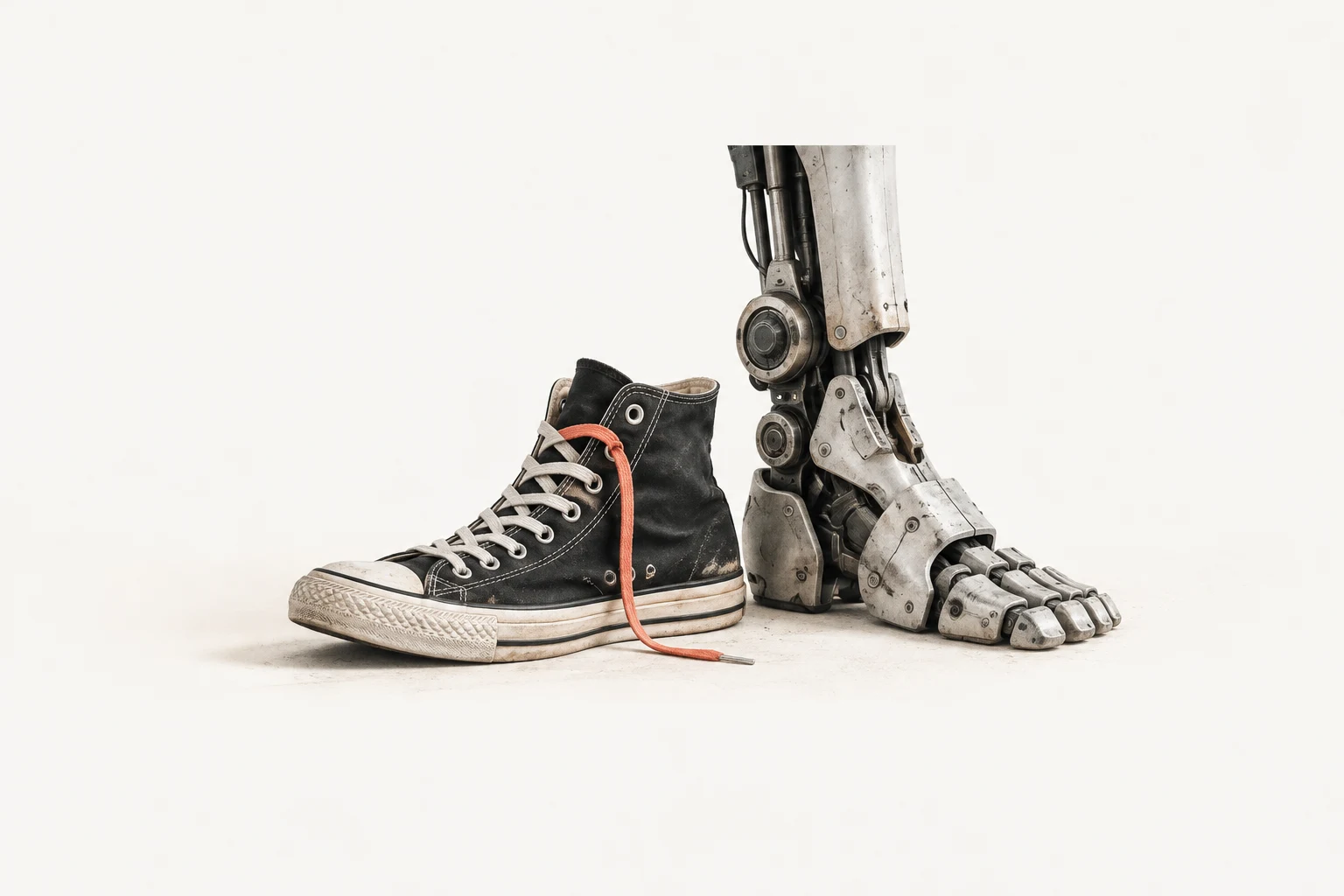
In a world full of robots, Will Smith’s character still wants his Converse.
That small choice gives the brand a distinct role in I, Robot. The film was released in 2004 and is set in 2035. A familiar shoe appears inside a future that has otherwise moved on.
The placement is conspicuous: black high-tops receive camera attention and a spoken introduction—“Converse All-Stars, vintage 2004.”
The interesting marketing question is what that appearance communicates beyond the brand name.
A present-day product becomes a future classic
For the audience watching in 2004, the shoes belonged to the present. Inside the film, they belonged to the past.
That changes their meaning. Something available to buy now is presented as something a person might still choose decades later.
My reading is that the setting gives Converse an association with endurance. The film does not need a separate claim about timeless style; the contrast between the familiar shoe and the futuristic world supplies the idea.
This is an interpretation of what appears on screen, rather than a claim about Converse’s documented campaign intentions.
The product helps describe the character
Will Smith’s detective distrusts the robots around him. His preference for older footwear sits comfortably beside that resistance to the world’s enthusiasm for technology.
To me, the shoes suggest a person who makes his own choices about what deserves replacing.
That is more specific than putting a brand on a famous actor. A recognisable product becomes part of a character’s preferences, and those preferences give the product an attitude.
Converse can be read here as familiar, individual and worth keeping. Its established appearance provides a contrast with the film’s machines.
For a marketer, that distinction matters. Screen presence tells us the product was visible. Its relationship with the character tells us what the exposure might mean.
The placement is memorable—and commercially obvious
The scene also draws attention to the act of advertising. The shoes are shown prominently, and the dialogue names them.
A viewer can understand the character connection and still find the emphasis excessive. Narrative relevance does not automatically make product placement feel natural.
This is the tension worth discussing. Give a product too little attention and its role may pass unnoticed. Emphasise it heavily and the viewer may begin noticing the commercial arrangement more than the story.
Converse’s appearance in I, Robot offers material for both readings. The shoes have a reason to belong to this character, while the presentation makes their promotional role difficult to miss.
What this example can—and cannot—tell us
It would be easy to declare the placement a success simply because people can recall the scene.
Recall, favourable associations and purchases are different outcomes. The film alone cannot establish how many customers bought the shoes because of it, what the placement cost or whether it generated a positive return.
The creative idea is easier to examine: an existing product receives a new context, a spoken identity and a connection to a character.
The most interesting part is the future setting. Converse participates in that world without having to look futuristic. Its familiarity becomes its contribution to the scene.
The value of being something people keep
Brands often introduce products by showing what is new about them. This scene creates an opportunity to value what remains recognisable.
The character lives in 2035. He still chooses those shoes.
For me, the placement’s strongest idea is that a classic can retain a place in someone’s life while everything around it changes.
That gives Converse more than a moment on screen. It gives the shoe a possible role in the way a viewer imagines their own style: something chosen deliberately, rather than replaced automatically.
Sources
- 20th Century Studios: I, Robot
- 20th Century Studios Japan: film setting
- OnMilwaukee: scene details and dialogue

Brand & Communications Strategist based in Amman. Curious about brands, people and the decisions that connect them.